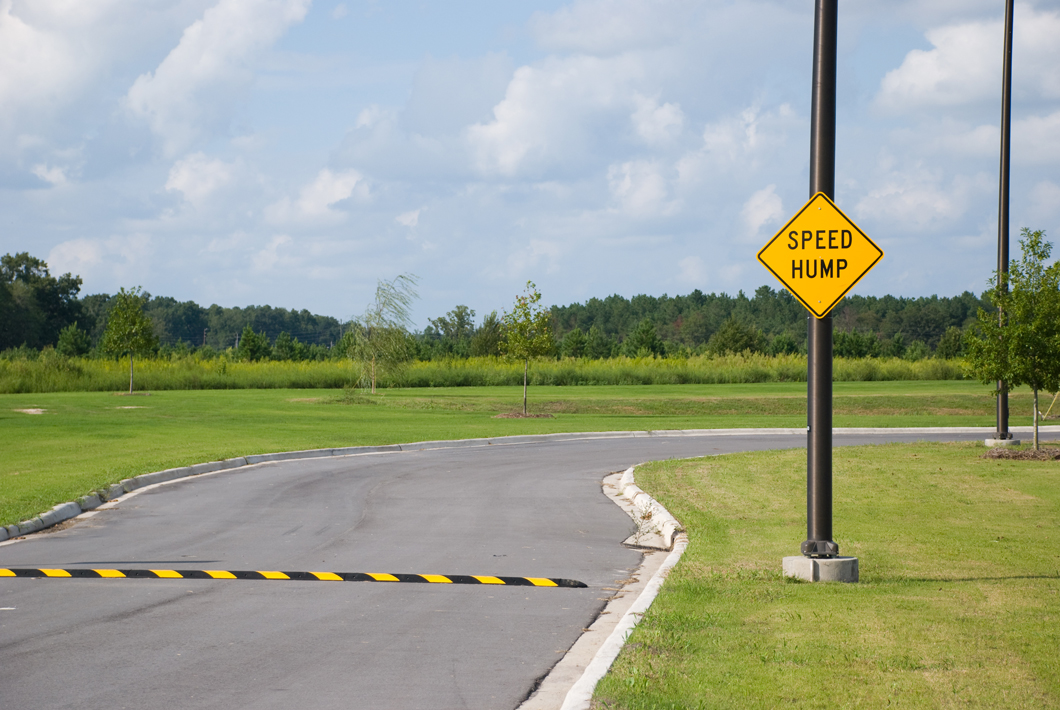
Let's Talk About Bumps on the Road: The Secret Heights of Speed Humps
You probably encounter these "small slopes" or "miniature hills" (speed bumps or speed humps) every day. Their purpose is simple: to force you to slow down! But do you know why some are gentle while others feel like a curb? This is entirely designed to match different vehicles, safety needs, and engineering specifications!
1. The Gentle 3 cm: Protection for Low-Chassis Motorbikes
- Height: Approximately 3 centimeters high (like a thick notebook lying flat).
- Purpose: Primarily designed with motorbikes, bicycles, or small electric vehicles in mind. This height is suitable for lanes with high motorcycle traffic, ensuring the safety of low-chassis vehicles and preventing scraping or impact damage to the undercarriage. It serves as a gentle reminder for drivers, slowing speeds from 30 down to about 15.
2. The Market-Standard 5 cm: The Private-Use Generalist
- Height: Approximately 5 centimeters high (like the height of a large paperclip).
- Target Audience: The most common height on the market, suitable for general vehicles like sedans and SUVs.
- Purpose: Manufacturers treat this as the universal model because its impact is relatively small, accommodating most car models. It is primarily used in non-public road environments, such as internal parking lots, community driveways, or any pedestrian-heavy private area, achieving a warning effect while maintaining a degree of passenger comfort.
3. The Specialized 7.5 cm and Above: The Heavy-Duty Enforcement
- Height: Typically starts from 7.5 centimeters and higher (like the height of a brick).
- Purpose: These are primarily used in industrial areas with heavy traffic, such as factories, docks, or logistics parks where large trucks, forklifts, or heavy vehicles are present. Due to the significant weight and momentum of large vehicles, a greater height and more visible target are needed to achieve sufficient deceleration. Furthermore, their high undercarriages are less likely to get stuck.
Conclusion:
Choosing a speed-reducing facility is a trade-off between safety and efficiency. The height is not chosen arbitrarily; rather, it must align precisely with the required speed limit, the vehicle types present on-site, and the nature of the road, to achieve the optimal traffic safety outcome.